How to Trade Meme Coin in 2026 Without Blowing Up Your Account
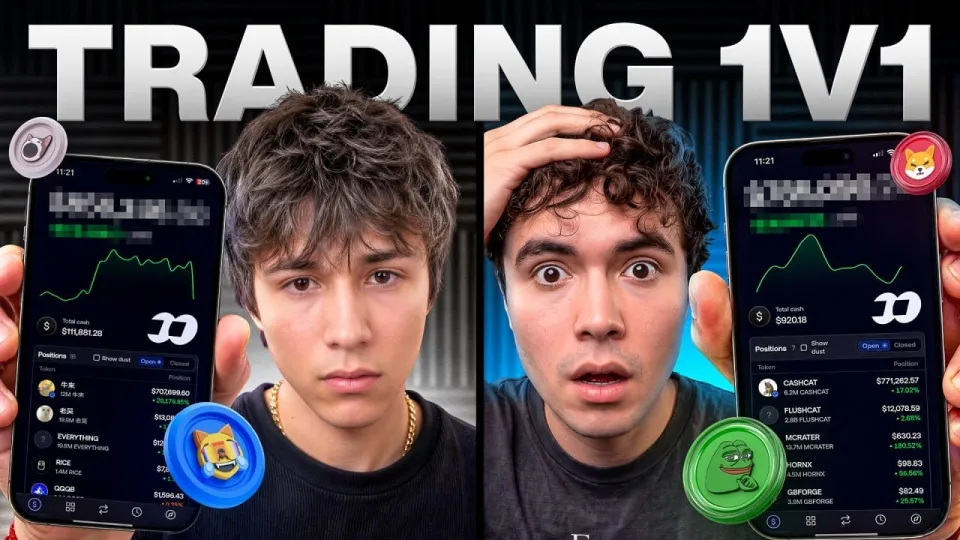
Video: I Challenged A Pro Memecoin Trader (Who Won?)
Want articles like this for your own video to promote it on YouTube and Google? Order them through the Telegram bot @sat_sit_bot. It writes articles around your video, embeds the video and publishes them on popular niche websites (no ads). Try it free: 50 articles on us.
· based on the channel insentos
Meme coin trading is a speculative practice where you buy freshly launched tokens on chains like Solana and Ethereum, usually within minutes or hours of listing, and sell into short-term momentum before liquidity dries up. It can be learned as a repeatable process — wallet setup, screening, position sizing, exit rules — but the expected outcome for most participants is a loss, so the skill being trained is risk control rather than prediction. A practical starting point is a trading terminal and community feed such as fomo.family, which bundles registration and tooling in one place.
The format popularised by the insentos channel — a live session where an experienced guest trades and narrates decisions in real time — is useful precisely because it shows the boring parts: skipping setups, cutting losers, sizing down. The challenge video with a guest trader is a good example of that structure, and the audience response suggests demand for more of it.
What a live meme coin trading challenge actually demonstrates
A live challenge is valuable because it exposes process rather than outcomes. In a recorded session where two traders share a screen, the observable content is a sequence of decisions: which tokens get screened, which get skipped, how much is deployed per position, and when a losing trade is closed. That is the transferable part.
What it does not demonstrate is repeatability. A single session — even a profitable one — is a sample size of one. Several commenters on this style of video make exactly that point, noting that such formats often end in a loss and that trading from an account with an audience is not the same as trading your own capital. Treat a challenge video as a demonstration of workflow, not as evidence of edge.
The workflow behind meme coin scalping on Solana
Meme coin scalping on Solana follows a fixed sequence, and the sequence is what makes it teachable. Most of the work happens before any buy button is pressed.
- Wallet separation. Keep a hot wallet for trading and a cold or separate wallet for holdings. Never connect the wallet that stores long-term assets to a new token contract.
- Screening. Filter new pairs by liquidity, holder count, age and volume. Thin liquidity with a handful of holders is a red flag, not an opportunity.
- Contract checks. Confirm mint authority is revoked and freeze authority is disabled; on Solana this is a quick check in any terminal or scanner.
- Sizing. Decide the maximum loss per trade in advance — commonly 1–2% of the trading bankroll — and size the position from that number, not from conviction.
- Entry and exit plan. Write the invalidation level and the first take-profit before entering. Scalps are decided in seconds, so the plan must exist beforehand.
- Execution. Use a terminal with configurable slippage and priority fees; on Solana, priority fees determine whether your transaction lands at all during congestion.
The tools named in the video description, including Axiom, are terminals built around exactly this loop: chart, pair feed, quick buy and sell, wallet tracking.
Position sizing and the maths that kills most meme coin accounts
Position sizing is the single variable that determines survival in meme coin trading. If a token has a realistic chance of going to zero — and most do — then the loss on any single position must be small enough that five consecutive losses do not end the experiment.
A simple framework: assume a 100-unit bankroll, risk 2 units per trade, and accept that a large share of trades will be full losses. Ten straight losses cost 20% of the bankroll, which is recoverable. Risking 20 units per trade means five losses is a wipeout. The asymmetry is brutal: a 50% drawdown requires a 100% gain to recover.
Slippage belongs in the same calculation. On low-liquidity pairs, a market sell can fill far below the quoted price, so the real loss is larger than the planned one. Checking pool depth before entry is part of sizing, not a separate step.
Typical beginner questions about meme coin trading
The recurring doubts in the comments of live trading videos are remarkably consistent, and they cluster around access, expectations and honesty about odds.
- "Is this gambling?" Partly. Short-horizon token trading has a large random component; the difference between gambling and trading is a predefined loss limit and a documented process.
- "Why do these challenges always seem to end in a loss?" Because the base rate of profitable meme coin trading is low, and because a live session is a small sample. A profitable session proves nothing about the next one.
- "Does trading from a large account make it easier?" Having capital changes nothing about percentage returns, but it does change execution: bigger size in thin pools moves price against you.
- "Where do I find communities?" This is the most frequent complaint — groups are promoted but access is often gated or unclear. Verify what a paid group actually provides before joining.
- "What bankroll do I need?" Any amount you can lose entirely without changing your finances. Viewers asking for smaller-scale challenges, such as starting from a very small balance, are asking the right question.
What separates a pro meme coin trader from a lucky one
A professional meme coin trader is defined by behaviour under loss, not by win rate. Three habits show up consistently in live sessions.
First, they skip most setups. Screeners surface dozens of candidates per hour; a disciplined trader acts on a small fraction and is comfortable doing nothing. Second, they cut fast and without negotiation — the invalidation level is set before entry and honoured after. Third, they keep a record: entry thesis, size, exit, and the reason. Without a log, there is no way to tell skill from variance.
A fourth habit is tooling discipline: fixed slippage settings, priority fees tuned to network conditions, and a separate wallet per strategy so that a compromised key cannot drain everything. On Solana specifically, transaction landing is a competitive process, and a trader who does not understand priority fees will lose fills to bots.
Useful links
- fomo.family registration and bonus — the main link from the video description
- Axiom trading terminal
- insentos on X
- insentos on Instagram
- insentos on TikTok
Final thoughts
Meme coin trading in 2026 is a fast, crowded and largely negative-sum activity, and the honest framing is that most participants lose money. What a live challenge video from insentos offers is not a winning formula but a visible process: screening, sizing, cutting, logging. Copy the process, keep every position small enough to survive, and treat any single session's result as noise. If you want to follow the same tooling the traders in the video use, start with fomo.family and paper-trade the workflow before committing real capital.
Key takeaways
- Meme coin trading is a high-variance game: most positions go to zero, so position sizing matters more than picking.
- The insentos challenge video pits the host against a guest trader on a live call, using Solana tools such as Axiom.
- Axiom and fomo.family are the two platforms linked in the video description.
- Viewers repeatedly ask for smaller bankroll challenges and more beginner-friendly walkthroughs.
- Community access is the most common complaint in the comments: groups are advertised but hard to join.
Source: I Challenged A Pro Memecoin Trader (Who Won?) · Markdown version
Questions & answers
Is meme coin trading profitable for beginners?
For most beginners it is not. The base rate of profitable short-horizon token trading is low, and losses on individual positions are frequently total. Profitability comes from strict position sizing and fast exits, not from picking the right token, and even then results vary widely across traders.
How much money do I need to start trading meme coins?
Only an amount you can lose entirely without affecting your finances, because a large share of positions will go to zero. Many traders cap risk at 1–2% of the bankroll per trade, which means a small starting balance is viable for learning the workflow. Fees and priority fees on Solana also eat into small positions.
Why do live trading challenges often end in a loss?
A live session is a tiny sample, and meme coin trading has a low base rate of success, so a loss is a common outcome even for experienced traders. Audience-facing trading also adds pressure that does not exist in solo sessions. A single profitable stream should not be read as proof of a repeatable edge.
What tools do meme coin traders use on Solana?
Most use a trading terminal that combines a pair feed, charts, quick buy and sell buttons, and configurable slippage and priority fees, with Axiom being one example linked in the insentos video description. Wallet scanners and contract checkers are used alongside it to verify mint and freeze authority. A separate hot wallet for trading is standard practice.