How to evaluate a political meme coin before you buy it
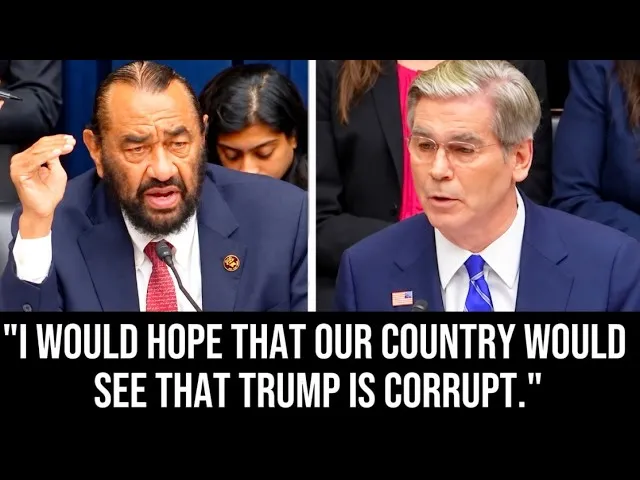
Video: WHOA: Al Green GRILLS Bessent over Trump's meme coin “scam”
Want articles like this for your own video to promote it on YouTube and Google? Order them through the Telegram bot @sat_sit_bot. It writes articles around your video, embeds the video and publishes them on popular niche websites (no ads). Try it free: 50 articles on us.
· based on the channel Daniel Reed
A political meme coin should be judged like any other speculative token: check who controls the supply, how concentrated the holdings are, how deep the liquidity is, and whether anyone has a legal duty to you. If the issuer holds most of the float and can unlock more at will, the token is a transfer of money from late buyers to early insiders, regardless of the branding.
What the Al Green and Bessent exchange showed about meme coin scrutiny
Senator Al Green used a hearing to press Treasury Secretary Scott Bessent on a meme coin connected to Donald Trump, framing the arrangement as a scam, and Bessent's responses stayed broad rather than specific. The exchange matters for traders because it marks the point where a politician-linked token moved from an internet curiosity into formal congressional questioning. Green's line of attack was not about price volatility but about who profits and who carries the risk. Bessent did not walk through the token's supply schedule, holder distribution or disclosure obligations, and that silence is itself informative: there is no ready regulatory framework that answers those questions for a token launched by a political figure. For anyone holding or considering such a token, the hearing is a reminder that the exit door can close quickly when a token becomes a political story rather than a trading story.
How to check a meme coin's supply and insider concentration
Start with the contract, not the community, because supply design determines who wins when the price moves. A token that reserves a large share for the issuer, the team or an affiliated entity gives those holders the ability to sell into every rally.
- Find the total supply and the circulating supply on a block explorer or a tracker such as CoinGecko or DexScreener.
- List the top 20 holders and their percentages; anything above roughly 10% in a single non-exchange wallet is a red flag.
- Check whether the contract has mint, freeze or blacklist functions that a small group can trigger.
- Look for vesting or unlock schedules; a cliff unlock in the near future is a scheduled sell wall.
- Confirm whether liquidity is locked and for how long.
A meme coin with a genuinely distributed float behaves very differently from one where a handful of wallets hold the majority. The second type can be pushed down 70% by a single seller, and no amount of social media enthusiasm changes that arithmetic.
Why meme coins have no floor and what that means for buyers
A meme coin has no cash flow, no treasury, no claim on assets and no legal right to repayment, so there is nothing to anchor its price except the next buyer. That is the structural difference between a meme token and an equity or a bond, and it is why the phrase "greater fool" keeps appearing in these discussions. When buyers stop arriving, the price does not fall to fair value; it falls toward zero, because the only support was demand itself. Comments from viewers of the hearing made the same point in blunter terms, describing the tokens as a Ponzi-like structure and asking what it says about buyers when no further buyer appears. Traders should size positions as if a total loss is a realistic outcome, not a tail risk.
Typical questions traders ask about politician-linked tokens
The most common doubts are about access, legitimacy and laundering, and each has a practical answer. Some buyers assume a token tied to a public figure grants influence or insider access; in practice, holding a token usually confers no rights, no meetings and no governance over anything. Others ask whether official-looking branding makes a token safer; it does not, because branding is not a legal guarantee and no regulator has signed off on the token. A third recurring question is whether these markets are used to move money; blockchain analysis firms track exactly that, and unusually large wallet clusters with no prior history are worth checking before you buy. Finally, people ask why anyone would buy at all: the honest answer is speculation on attention, and attention is the one input a political figure can create and withdraw at will.
What regulation could change for meme coin traders
The hearing signals that politician-linked tokens may face disclosure requirements, and disclosure changes the risk profile of holding one. If issuers are eventually required to publish holder concentration, unlock schedules and marketing payments, the worst-designed tokens become easier to identify and harder to sell. That would not make meme coins safe, but it would make the information asymmetry smaller. Until rules exist, traders should assume the burden of due diligence falls entirely on them. Watch for concrete legislative proposals rather than hearing rhetoric; a bill with a sponsor and a committee referral is a real signal, a viral clip is not.
How to manage risk when trading a meme coin
Risk management, not prediction, is what separates a survivable trade from a donation. Set a maximum position size you can lose completely, use a stop discipline that does not depend on illiquid order books, and avoid leverage on tokens with thin liquidity because liquidation cascades hit small caps hardest. Take partial profits on the way up rather than waiting for a target that may never print, and keep records of entry and exit prices for tax purposes. If a token's price depends on a single person's public statements, treat every headline as a potential liquidity event in both directions.
Summary
The Al Green and Bessent exchange turned a politician-linked meme coin into a formal political question, and the practical lesson for traders is unchanged: read the supply, count the insiders, check the liquidity and assume you can lose everything. Daniel Reed's breakdown of the hearing is a useful starting point for understanding how the political pressure around these tokens is building and why the answers given under oath were so thin on specifics. Nothing in the exchange created a floor under any token, and nothing in it removed the basic fact that a meme coin is a bet on the next buyer.
FAQ
Key takeaways
- Senator Al Green pressed Treasury Secretary Scott Bessent over a meme coin tied to Donald Trump, calling the arrangement a scam.
- Bessent's public answers stayed general and did not address the specific economics of the token.
- The core design flaw of most meme coins is a small insider float against a large locked supply controlled by the issuer.
- A meme coin has no cash flow, no claim on assets and no legal recourse, so its price depends entirely on the next buyer.
- Regulatory scrutiny of politician-linked tokens is now a live political issue, not a hypothetical one.
Source: WHOA: Al Green GRILLS Bessent over Trump's meme coin “scam” · Markdown version
Questions & answers
What is a political meme coin?
It is a speculative token launched or promoted in connection with a political figure, usually with no cash flow, no governance rights and no legal claim on anything. Its price is driven by attention and trading flow rather than by earnings or assets. Branding and endorsements do not create investor protections.
Did the hearing prove the token is a scam?
No hearing establishes fraud by itself; Senator Al Green characterised the arrangement as a scam and pressed Treasury Secretary Scott Bessent on it, while Bessent's answers stayed general. What the exchange did show is that no clear regulatory framework exists to answer basic questions about supply, holders and disclosure for such tokens.
How can I tell if a meme coin is a pyramid structure?
Look at holder concentration and unlock schedules: if a small group controls most of the supply and can release more tokens later, new money flows to early insiders. Check the top wallets on a block explorer, confirm whether liquidity is locked, and see whether the contract allows minting or freezing. Distributed float and locked liquidity are the minimum signs of a fairer launch.
Is holding a politician's token a way to gain access or influence?
In almost all cases, no. Holding a token typically confers no meetings, no voting rights over policy and no special treatment, and any promise of access should be treated as a marketing claim. Buy only for the speculative exposure, and only with money you can afford to lose entirely.